heyuan952568@gmail.com
+86 18730808985
Hebei, China
Phone: +86 18730808985
Email: heyuan952568@gmail.com
Contact: zihao zu — Sales Director
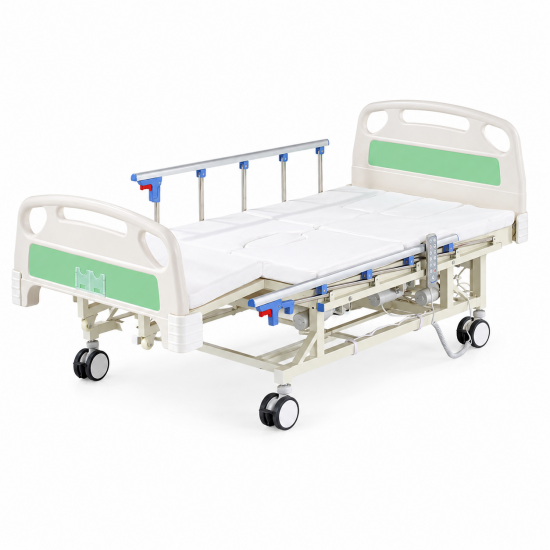
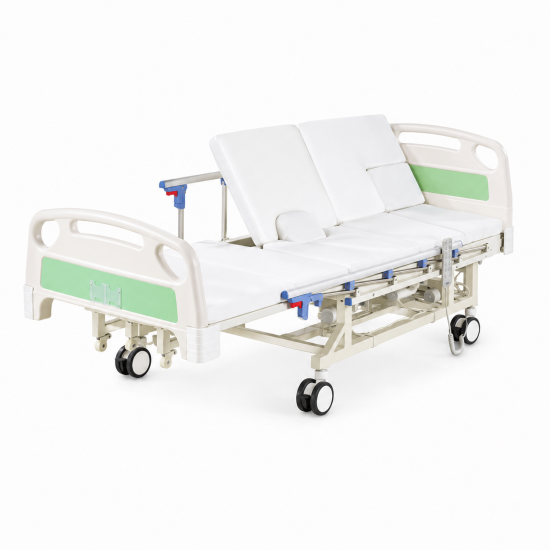
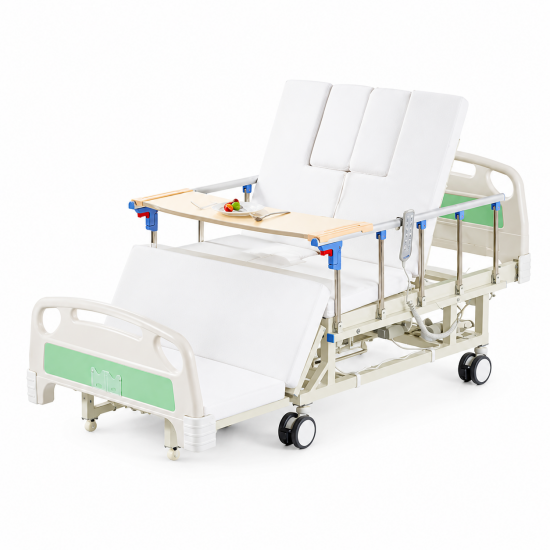
Residents with limited mobility often need help with position changes throughout the day. While some users only require backrest and leg adjustment, others need additional assistance when turning toward the left or right side. This electric nursing home bed is designed for that intermediate level of care.
The bed combines electric backrest and leg positioning with an upper-body lateral repositioning system. Unlike whole-body turning models, the turning movement is concentrated around the upper section of the sleeping platform, providing assisted movement for the back and torso while maintaining a relatively straightforward bed structure.
For nursing homes and long-term care facilities, this configuration provides a practical entry model when conventional positioning functions are no longer sufficient but a more complex whole-body turning system is not required.
The key feature of this model is the electrically assisted upper-body turning mechanism. The segmented upper platform can support movement toward either side, helping reposition the resident's back and torso during routine nursing care.
This gives care staff an additional positioning option beyond conventional backrest and leg adjustment. It is particularly relevant for residents who spend extended periods in bed and have difficulty changing their upper-body position independently.
On a whole-body turning model, lateral movement extends across a larger portion of the sleeping platform, providing coordinated repositioning from the upper body toward the lower limbs.
This model uses a more focused approach. Lateral movement primarily supports the upper-body area, making it suitable where assisted back and torso repositioning is required without a full-length turning mechanism.
The back section can be raised electrically to support the resident in a more upright position. This can be useful during meals, drinking, reading, communication and other daily activities performed from the bed.
For residents unable to sit up independently, repeated manual upper-body lifting can add to the physical workload of care staff. Electric backrest adjustment allows the required position to be established through the control system while staff supervise and assist the resident as needed.
The leg section provides another electric positioning option for daily care. It can be adjusted according to the resident's resting requirements and used together with the backrest to provide different positions throughout the day.
A long-term care resident may need different positions for sleeping, resting, eating and nursing procedures. Combining backrest adjustment, leg positioning and upper-body turning allows staff to adapt the bed according to changing care requirements without moving the resident to another platform for every position change.
This model is equipped with folding aluminum alloy side rails. The rail structure provides bedside protection when raised while allowing direct access to the resident when lowered.
Nursing staff may need to approach the resident from the side of the bed several times during a shift. Folding rails allow the bedside area to be opened for repositioning, clothing changes and other hands-on care procedures, then returned to the protective position when required.
For nursing facilities, side-rail design should be considered from an operational perspective as well as appearance. The aluminum folding structure provides a straightforward solution where repeated access to the sleeping area forms part of the normal care routine.
This model uses a standard-width care-bed platform and is intended for users who do not require an extra-wide or bariatric sleeping surface.
For nursing homes, maintaining conventional bed dimensions can help preserve working space around the bed, particularly in rooms where multiple pieces of care equipment or furniture are already in use.
Extra-wide beds have an important role for larger users, but additional width should be selected according to actual requirements. For standard-size residents, a conventional-width turning bed can provide assisted repositioning while using room space more efficiently.
For institutional buyers, the practical value of an electric care bed depends on how its functions fit into everyday staff routines. A long list of features is less important than whether the bed assists with tasks that are performed repeatedly.
The lateral repositioning mechanism assists staff when the resident's back and torso need to be moved toward either side.
Electric backrest movement helps residents move from a flat lying position toward a supported sitting posture without relying entirely on manual lifting.
Electric leg adjustment provides additional flexibility for residents who remain in bed for extended periods.
Folding aluminum rails can be lowered when staff need closer access for routine hands-on care.
Different residents require different levels of positioning support. For this reason, nursing facilities and distributors do not necessarily need the same bed configuration for every user.
A standard electric Nursing Bed is suitable when the primary requirements are conventional backrest, leg and other basic positioning functions.
This model adds assisted left and right movement around the upper body. It is intended for residents who need more repositioning support than a conventional adjustable bed provides.
Whole-body models extend lateral repositioning across a larger portion of the sleeping platform and are better suited to users who require more comprehensive turning assistance.
This product therefore fills an important position between conventional electric nursing beds and more advanced whole-body turning configurations.
For procurement teams, purchasing the most complex bed for every resident is not always necessary. Equipment should correspond to the actual level of care required.
By focusing lateral repositioning on the upper body, this model provides an assisted-turning function while retaining a simpler configuration than a full-length turning system. This can make it a practical option for facilities that need to balance functionality, resident requirements and purchasing budgets.
A nursing home may have relatively independent residents, users who need occasional positioning assistance and highly dependent residents requiring extensive care. Providing different bed configurations according to these care levels can be more practical than using one specification throughout the facility.
This upper-body turning model can serve the intermediate group where electric repositioning assistance is valuable but whole-body turning is not essential.
Suitable for residents who spend extended periods in bed and require regular assistance with positioning.
The electric adjustment and turning functions can support elderly residents who have difficulty sitting up or changing their upper-body position independently.
The model can also be considered for longer-term rehabilitation environments where users require ongoing positioning assistance during recovery.
Its conventional-width platform makes it suitable for users who require additional repositioning functions without the need for an extra-wide bed.
Determine whether residents need upper-body assistance or more extensive whole-body lateral repositioning. The two mechanisms serve different levels of care.
Consider how much independent movement the intended users retain. A turning function provides the greatest practical value when caregivers are already required to assist with regular position changes.
If staff frequently provide hands-on care from the bedside, folding aluminum side rails can provide convenient access when lowered.
Confirm whether an extra-wide platform is genuinely required. Standard-width models can be easier to integrate into existing nursing home room layouts.
The appropriate model should match the resident's actual care requirements. A focused upper-body turning system can provide a practical alternative when the additional complexity of a whole-body turning bed is unnecessary.
This electric nursing home bed combines upper-body left and right repositioning with electric backrest adjustment, leg positioning and folding aluminum alloy side rails. Its purpose is to provide more positioning assistance than a conventional care bed while maintaining a straightforward configuration for routine institutional use.
As the entry-level model within our Turning Nursing Bed series, it gives nursing homes, elderly care facilities and medical equipment distributors another option for matching bed functions to different resident dependency levels.
For product specifications, bulk purchasing, distributor cooperation or OEM/ODM configuration requirements, please contact us for further information.

The nursing beds meet our daily care requirements very well. The products arrived in good condition, and the overall purchasing experience was smooth and professional.

We were looking for a supplier that could provide stable quality and flexible OEM service. Their responsiveness and product consistency have helped us grow our business.

The care beds are comfortable, easy to operate, and well received by both residents and caregivers. The team provided helpful support throughout the purchasing process.

We have purchased care beds for several projects, and the product quality has been consistent. Communication was clear, and delivery was arranged on schedule. A reliable supplier to work with.
Yes. We provide OEM and ODM services for care beds, nursing beds, and healthcare furniture, including customization of functions, colors, logos, packaging, and specifications.
Our products are manufactured under ISO 9001 and EN ISO 13485 quality management systems. Specific certifications may vary depending on the product model and market requirements.
Production time depends on the product type and order quantity. Most standard care bed orders can be arranged within the agreed production schedule.
MOQ varies by product model. Please contact us with your requirements, and we will recommend the most suitable purchasing solution.
Yes. We provide product guidance, technical documentation, and responsive after-sales support to help customers use and maintain our care beds efficiently.
Send us your inquiry today and receive product details, quotations, and professional support within 24 hours.
+86 18730808985
Mon-Fri, 8am-6pm CST
heyuan952568@gmail.com
We reply within 24 hours
+86 18730808985
Instant messaging available
Yintai Industrial Park, Jizhou District, Hengshui City, Hebei Province, China
